- +61 407 427 785
- info@peelwindowcleaning.com.au
- Mon - Fri: 9:00 AM - 6:00 PM

Most solar panel cleaning quote Erskine requests start the same way, someone checks their inverter app after a run of clear days and the output doesn’t match what they’d expect. That gap is usually dirt, not a fault.
A panel doesn’t need to look filthy to be underperforming. Solar panel cleaners Erskine gets called out to check most often, find one of these.
Wind off the Peel Inlet carries fine salt onto rooftop glass. It scatters incoming light instead of letting it pass straight through to the cells, which shows up as a generation dip long before it’s visible to the eye.
Erskine’s estuary setting brings more birdlife through than suburbs further from the water. A single dropping can shade one or two cells, and a shaded cell drags down the output of the entire panel it sits on, not just that one spot.
Rain runs off a steep roof and takes some dust with it. On lower-pitch roofs, common across parts of Erskine, water sits longer and dries in place instead of draining away, which leaves more behind rather than less.
Systems installed in Erskine’s newer housing pockets often pick up builder’s dust or render dust well before the panels are due their first scheduled clean.
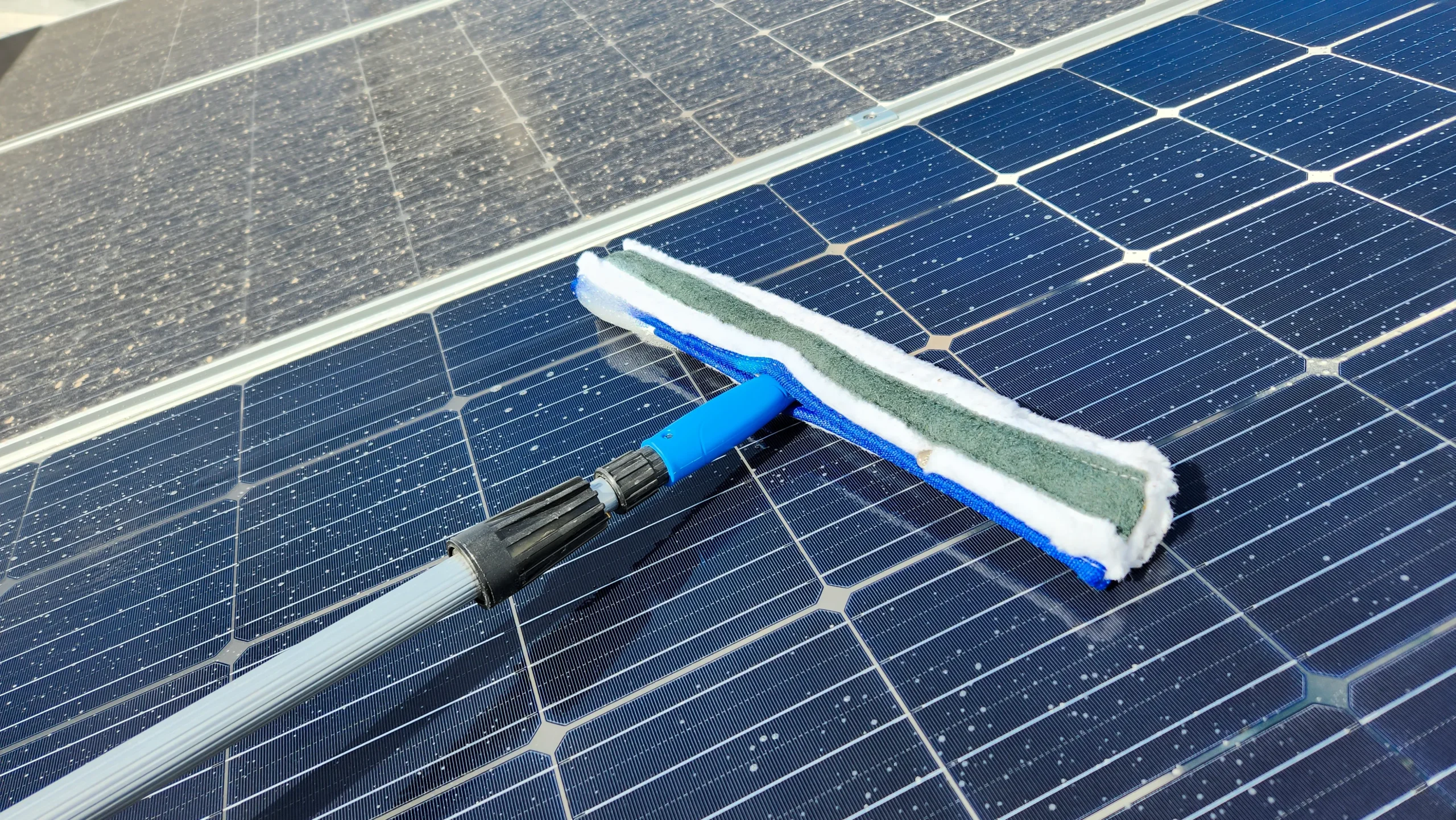
Standard home systems, cleaned with pure water technology, whether the array sits on a steep north-facing roof or a lower-pitch section that doesn’t drain as well.
Larger rooftop arrays, cleaned around your operating hours, so a business isn’t losing generation for weeks while a clean gets pushed back.
Systems facing the Peel Inlet pick up salt faster than panels a street or two back. We treat that as standard coverage on our Erskine round, not a special case with extra cost.
New installs in Erskine’s growing estates often need their first clean sooner than the manufacturer’s suggested schedule assumes, simply because of dust from surrounding building work.
Panels don’t fail loudly when they’re dirty, output just quietly drops. Most people only catch it by comparing a sunny week’s generation against the same week last year, or against a neighbour’s system.
No rain for weeks means nothing washes salt or dust off naturally. This is also peak generation season, so any drop in output costs more in real terms than the same buildup would in winter.
Storm fronts off the inlet push salt spray onto panels, and lower winter sun angles mean any film on the glass has a bigger relative impact on what gets through to the cells.
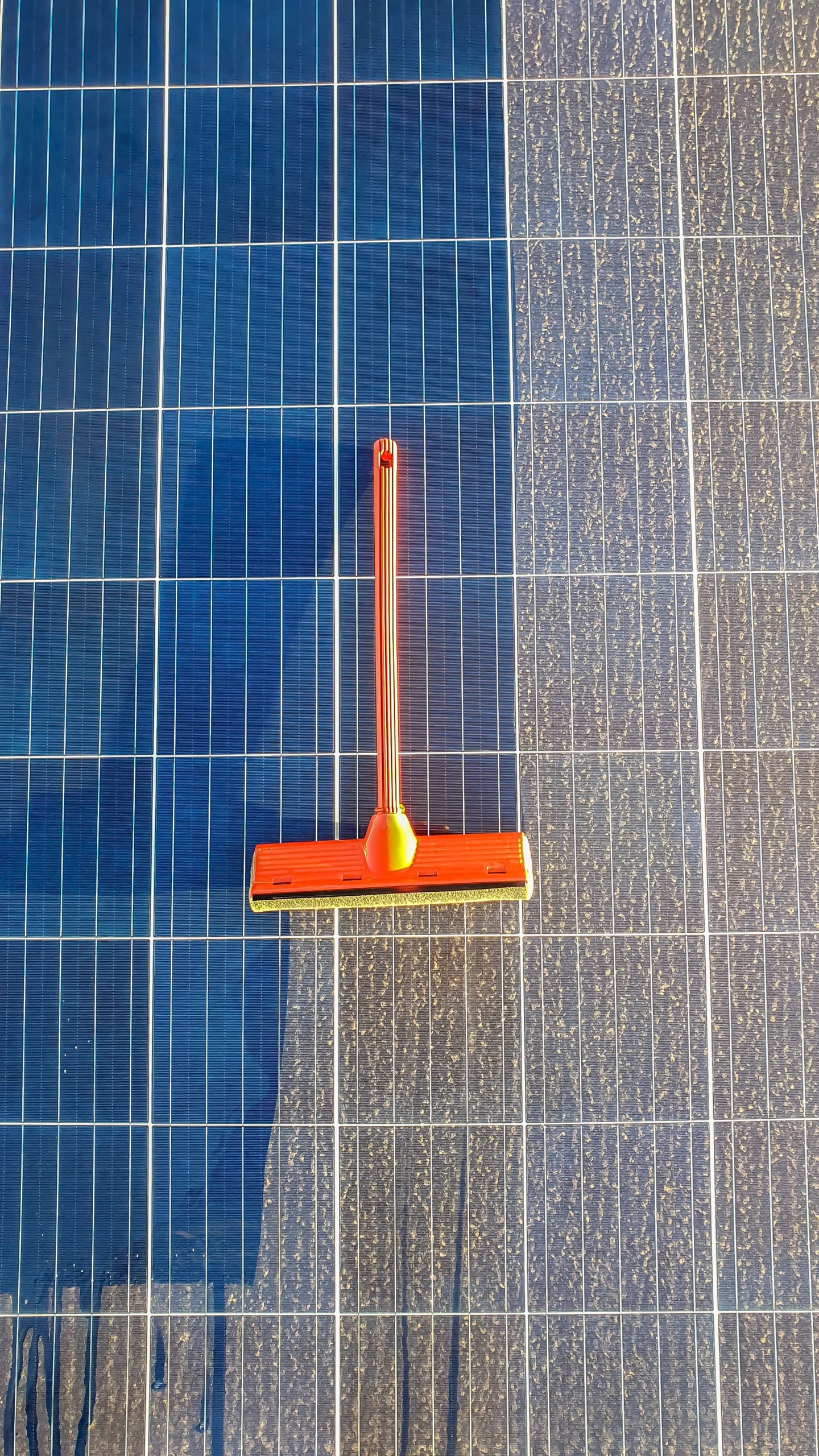
Rain removes loose dust but leaves dissolved minerals behind as it evaporates, and those minerals dry into a fine film across the glass. That’s why professional solar panel cleaning in Erskine uses pure water technology rather than relying on the next storm to sort it out. The process filters minerals out of the water before it touches the panel, so nothing’s left to dry into a film once it’s done.
The real test isn’t how the panels look from the driveway, it’s what the inverter app shows on the next clear day. A proper clean should show up as a measurable difference in generation, not just a shinier roof. If output doesn’t move after a clean, something in the process was missed.
Send us the number of panels on your system and roughly how the roof is pitched, and we'll come back with a straightforward price. No site visit needed just for a quote.
Foreshore-facing systems near the Peel Inlet generally need cleaning more often than arrays set back from the water, since salt buildup happens faster right on the coast. Most other Erskine properties can go longer between cleans.
We use non-abrasive pure water cleaning, which is the type of method most manufacturers recommend. If your system has specific cleaning instructions in its warranty documentation, it's worth checking those, and we're happy to work around them.
Yes, we clean rooftop arrays on commercial buildings across Erskine, scheduled around your operating hours so generation isn't lost while a clean sits on the to-do list.
Yes. New installs in Erskine's growing pockets often need an earlier first clean than owners expect, because of dust from nearby construction rather than anything wrong with the system itself.